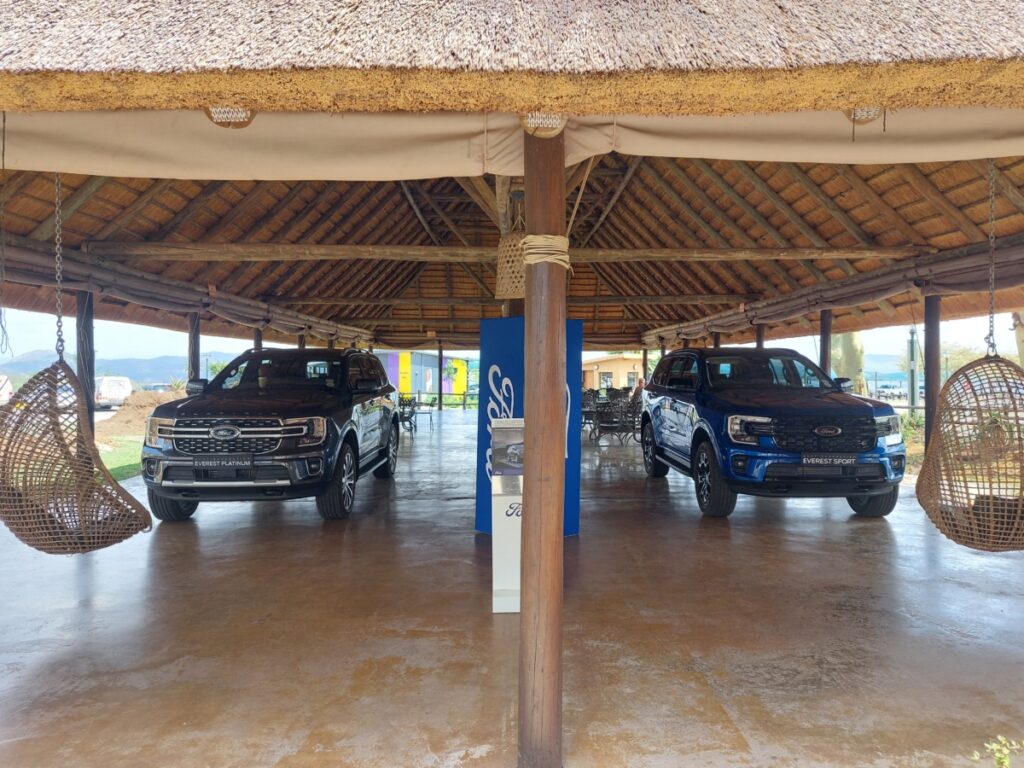
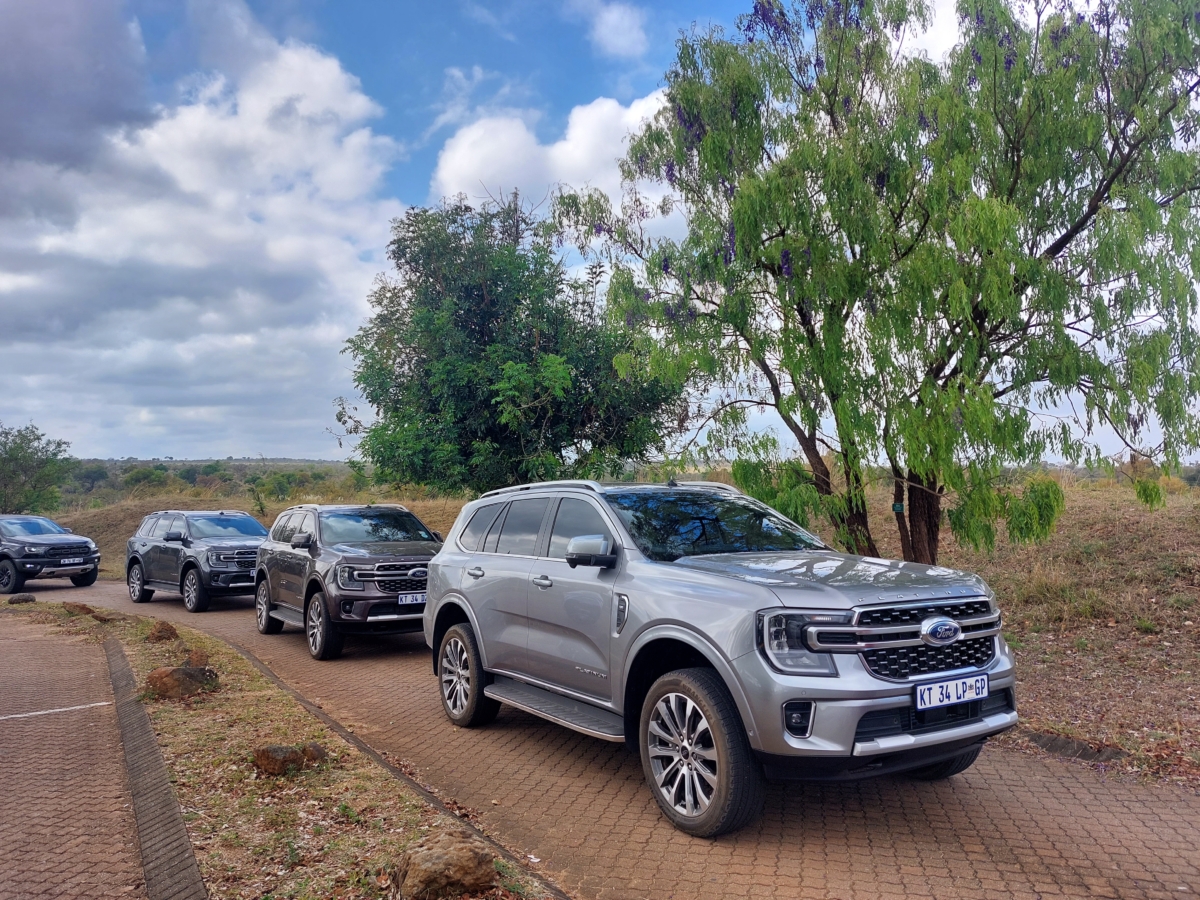
SA 4X4 recently embarked on a journey to Mpumalanga to test the much anticipated Next-Gen Ford Everest. At first glance from afar, the newcomer may seem a bit too bold on the outside, however, after standing next to it, that thought is quickly put to rest.
Ford mentioned that customer input played a great role, not only in the design of the new Everest, but with its technology too as the manufacturer added more new, modern technology on-board. The manufacturer took the time to understand the needs and wants that customers were seeking in an SUV.
First things first, the design.
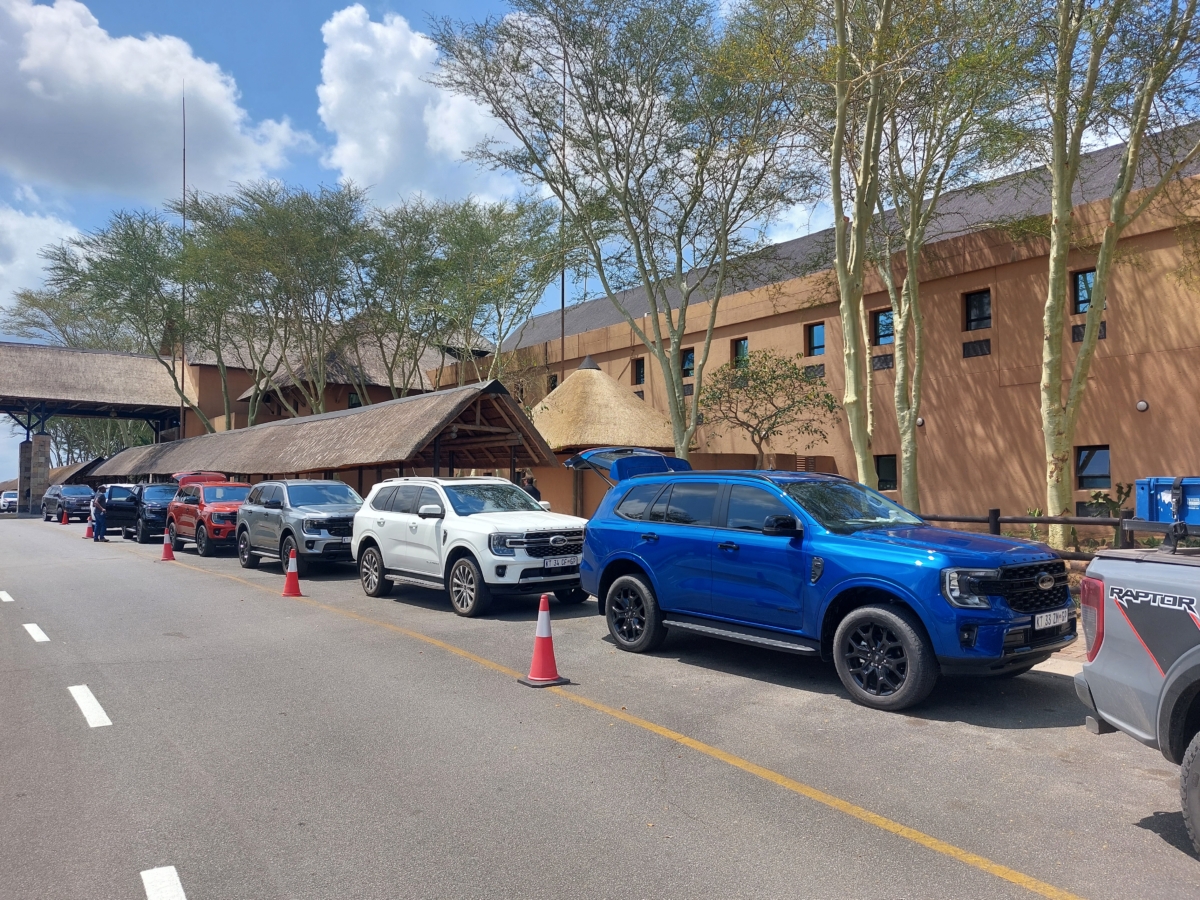
At first glance, you can see a lot of its Raptor sibling features on the front, now more square and boxier, and the roundness that we once knew the Everest’s design to be is now a thing of the past. The Everest boasts toughness and capability on the outside, and let us tell you, it sure kept to its word on as well as off-road, but we will get to that a bit later.
While the front-end offers C-clamp headlamps and daytime running lights, its rear end offers an entirely new look for the Everest overall.
The colour pallet chosen for the Everest are: Snowflake White, Absolute Black, Sedona Orange, Equinox Bronze, Aluminium Metallic, Arctic White, Meteor Grey, and Blue Lightning (Sport derivative only).
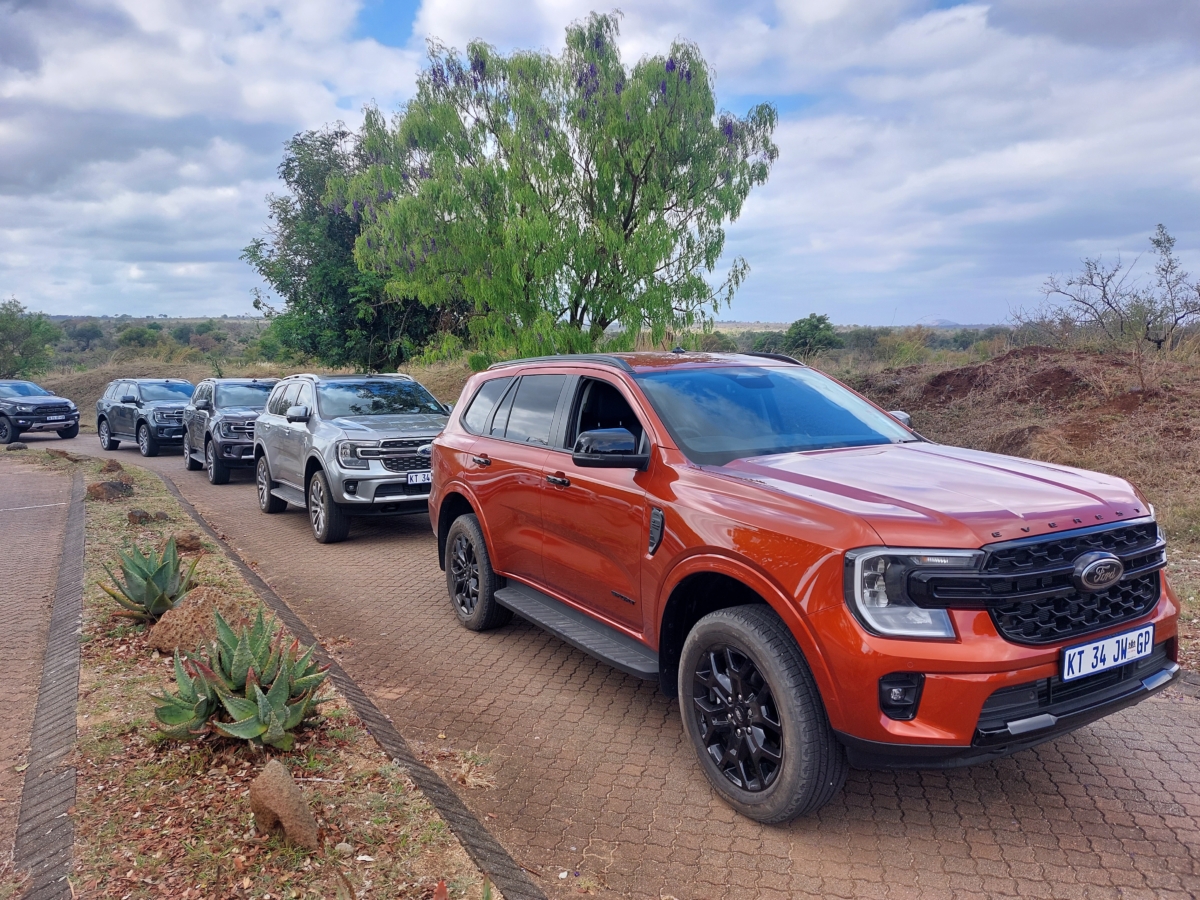
The newcomer is available in two derivatives: Dynamic Everest Sport and the Luxurious top of the range, Everest Platinum.
The Everest Sport has the heart of Ford’s 2.0-litre, Bi-Turbo, four cylinder engine that delivers 154 kW with 500 Nm of torque. The model is finished in black trim to its grille and alloy wheels, while the Everest Platinum has its chrome finish to the grille and wheels, giving it that luxurious look. The Everest Platinum is powered by Ford’s new 3.0-litre V6, turbodiesel engine that delivers 184kW and 600 Nm of torque. Both of the diesel derivatives are mated to an advanced 10-speed, automatic transmission.
How did it go on road?
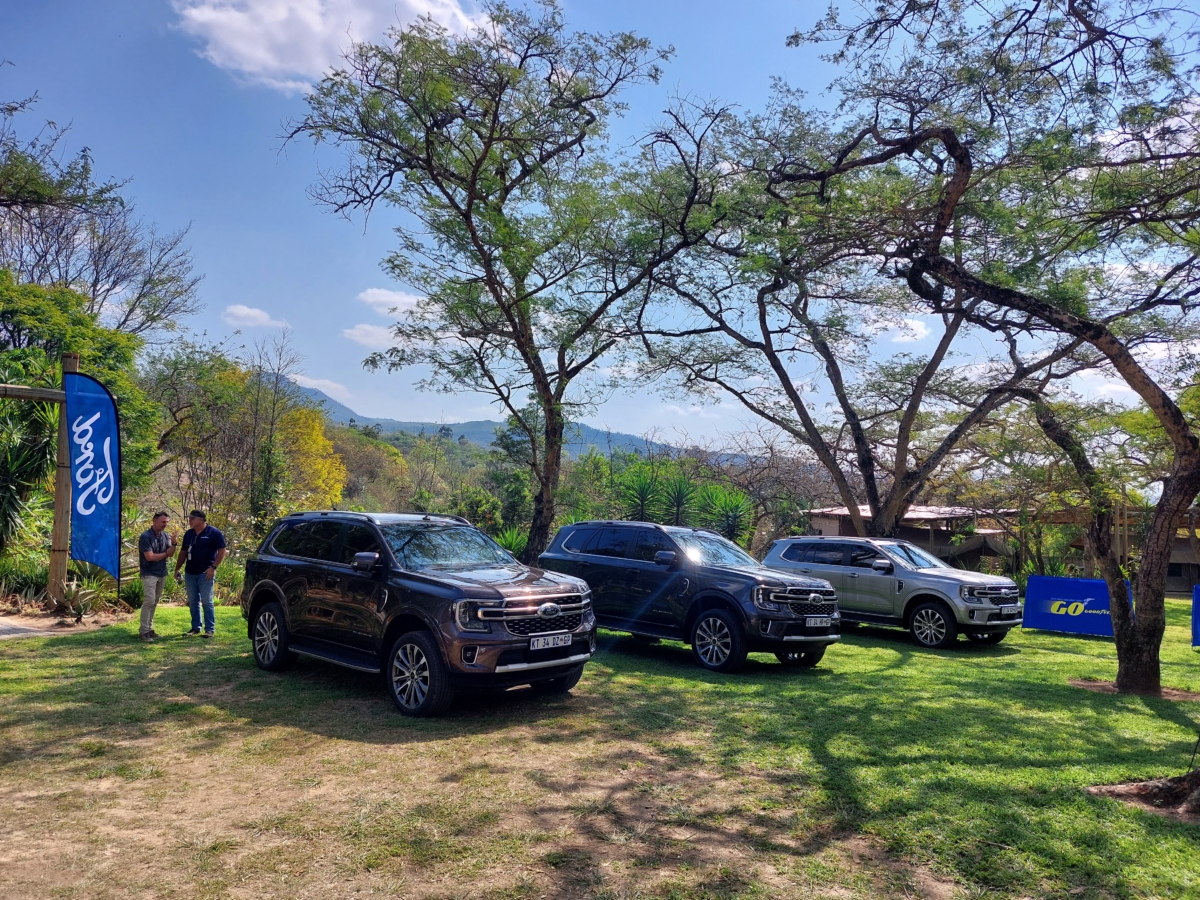
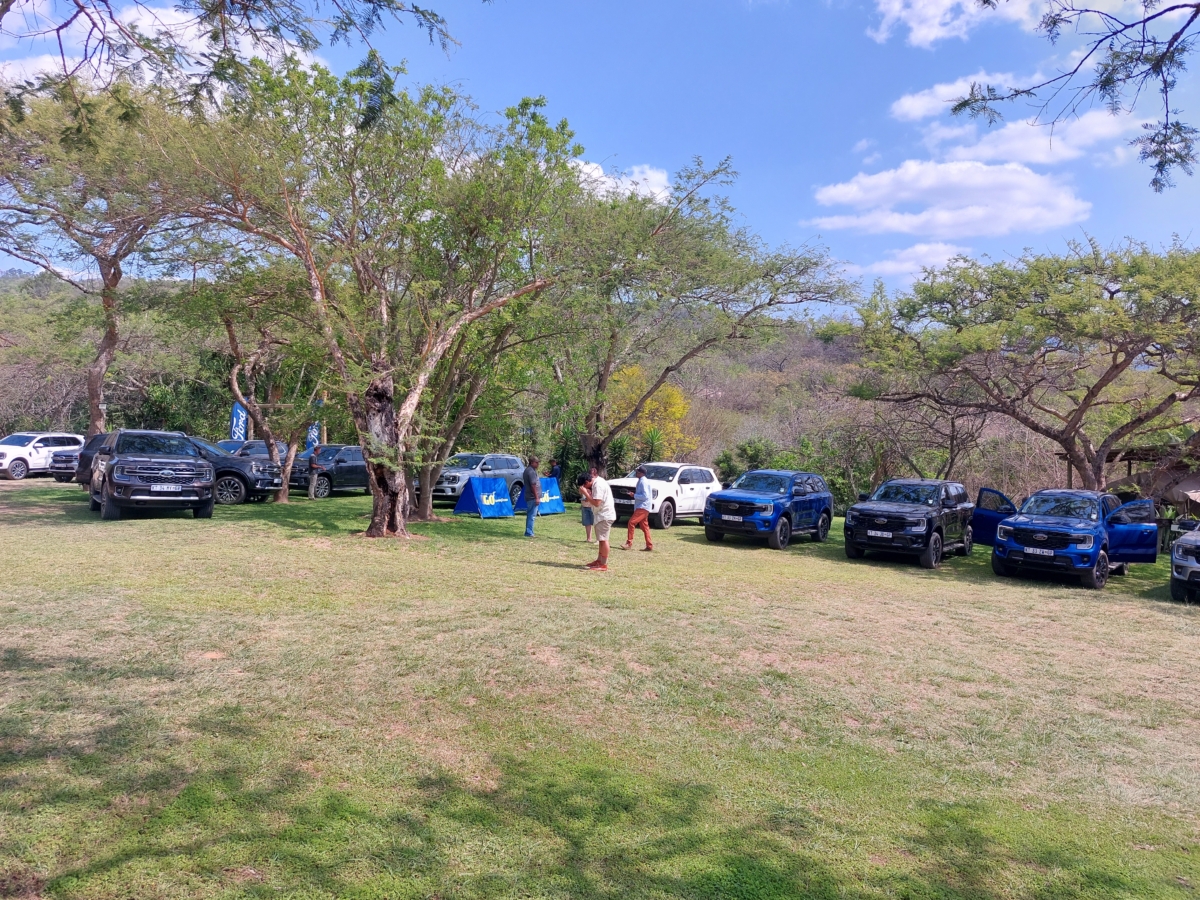
We started our test in the Everest Sport setting off to an off-road course at Alkmaar Farmstay nestled just outside Nelspruit and then from the Kruger’s National Park’s Phabeni Gate to the back of Kruger Mpumalanga International to head home, and swopping to a Platinum derivative in between.
Ford partnered up with Goodyear for this launch. Each Everest purchased will come with 18-, 20- or 21-inch wheels, depending on the need and want that the customer expects from their SUV.
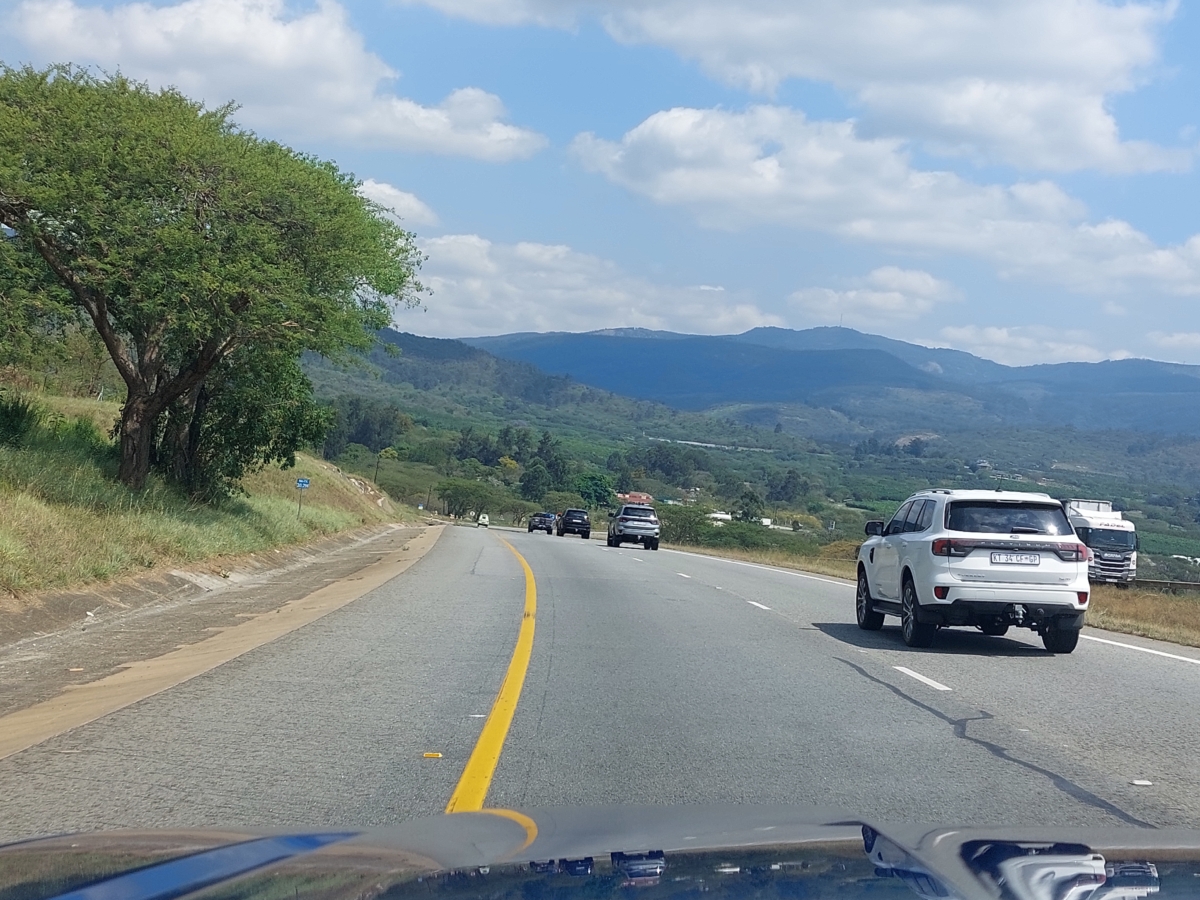
Of course, the bulky look of the Everest will not be everyone’s cup of tea and it might be judged as unstable on the road – this would definitely be a false claim.
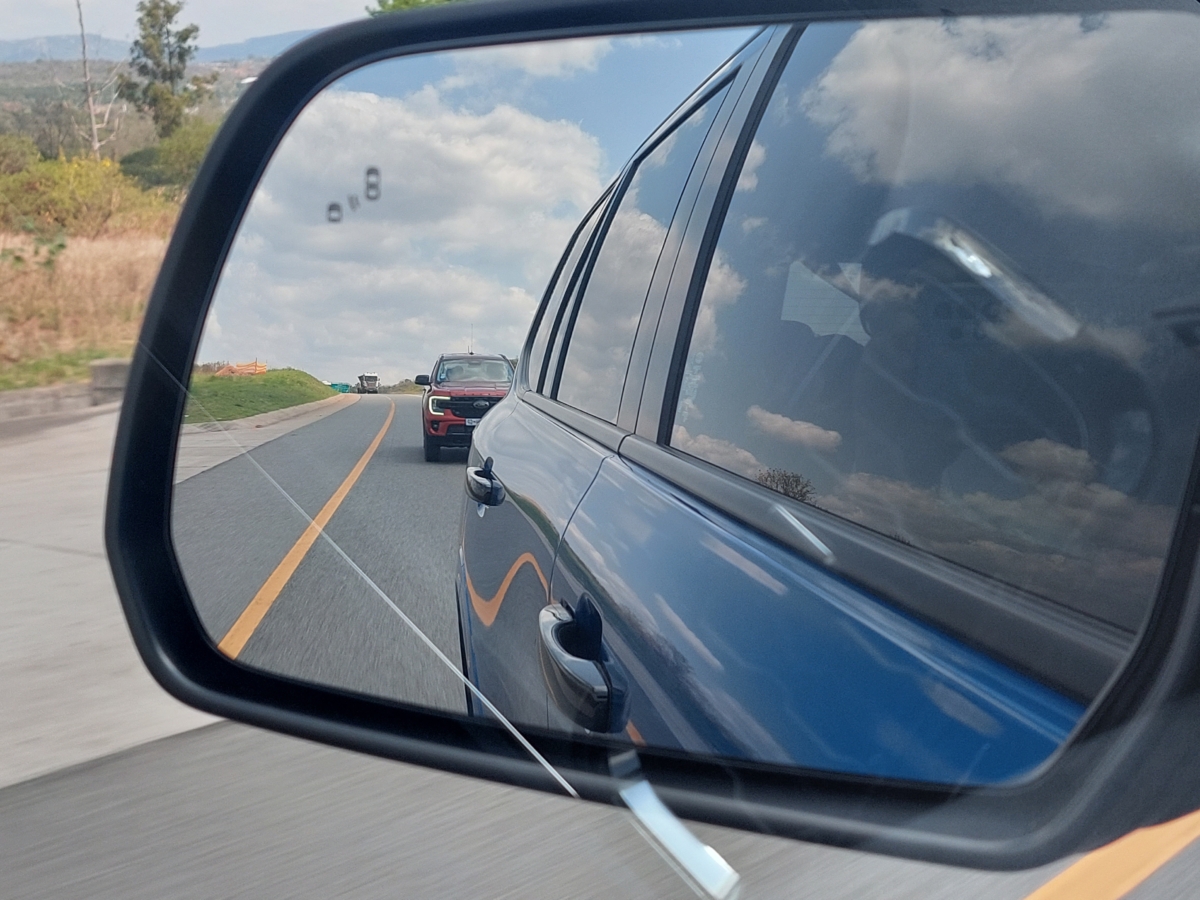
Another focus for the manufacturer was reducing the NVH, and like many roads around South Africa, we were in for a bumpy ride along some back roads of Mpumalanga, however, the cabin is silent. No rattling of doors or windows, and no squeaking of any kind from both inside the vehicle and outside, making it a fun to drive SUV.
Performance off-road
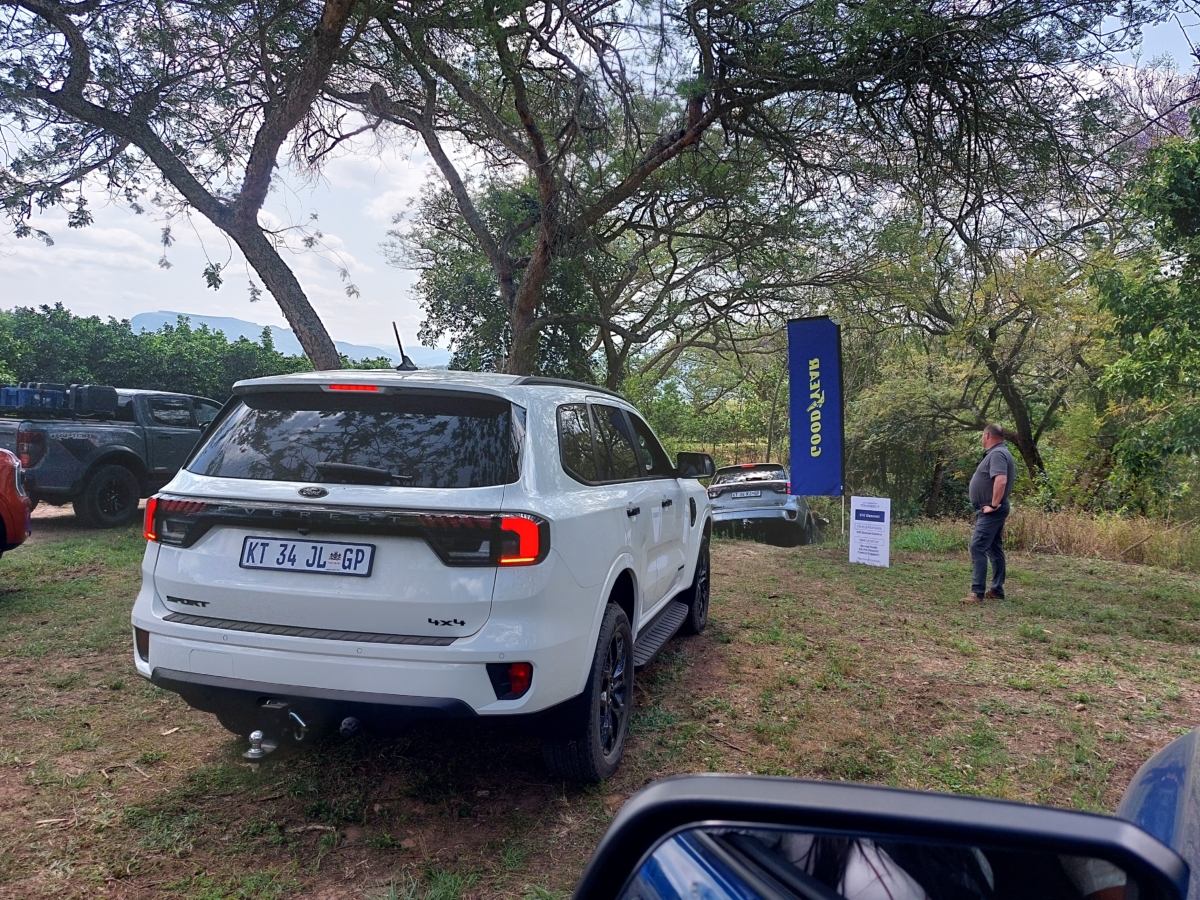
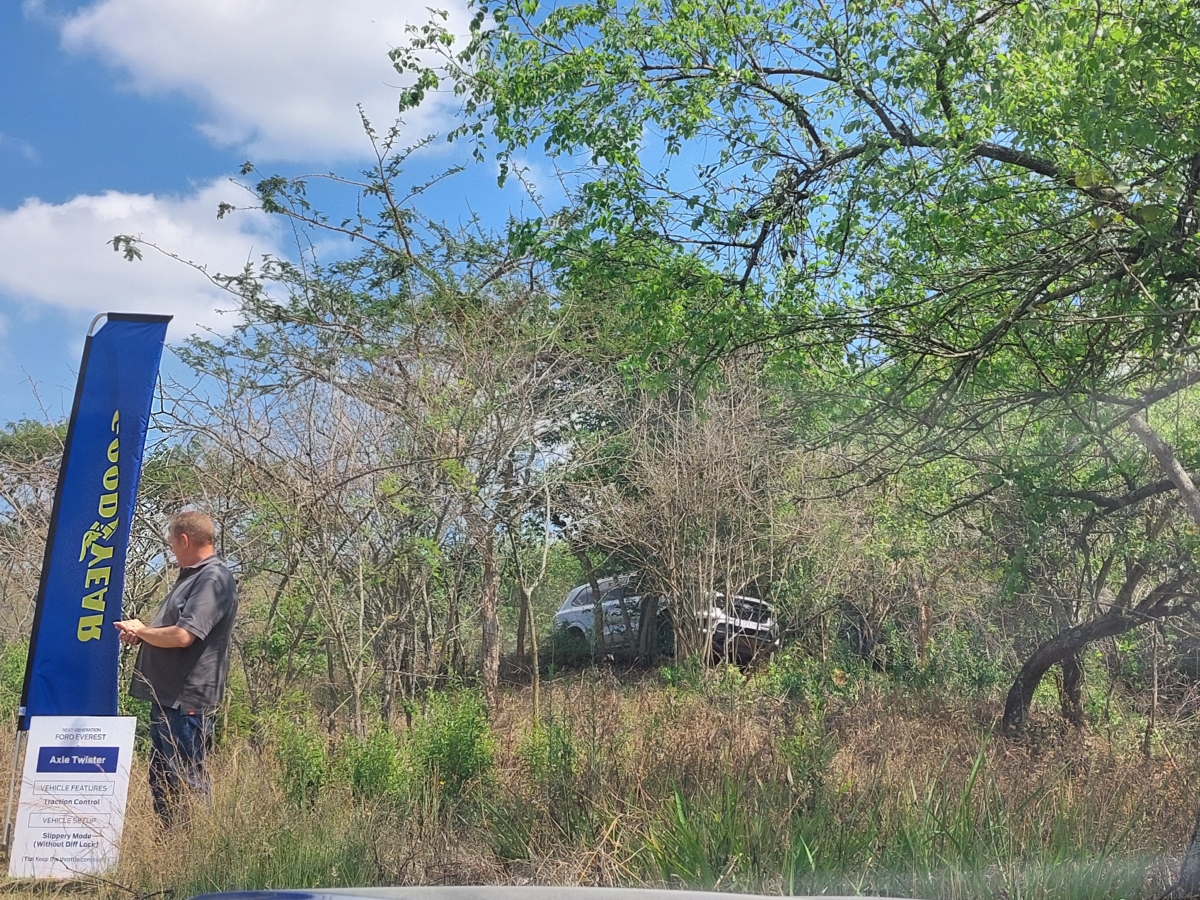
Want to do some exploring? The Next-Gen Everest is ready to go. Ford grouped us all together at Alkmaar’s 4×4 off-road course where we were given the opportunity to test this rugged beauty. We tested the hill descent control and locked differential which was activated by the touch of a button on the 12-inch infotainment system featured in the Everest.
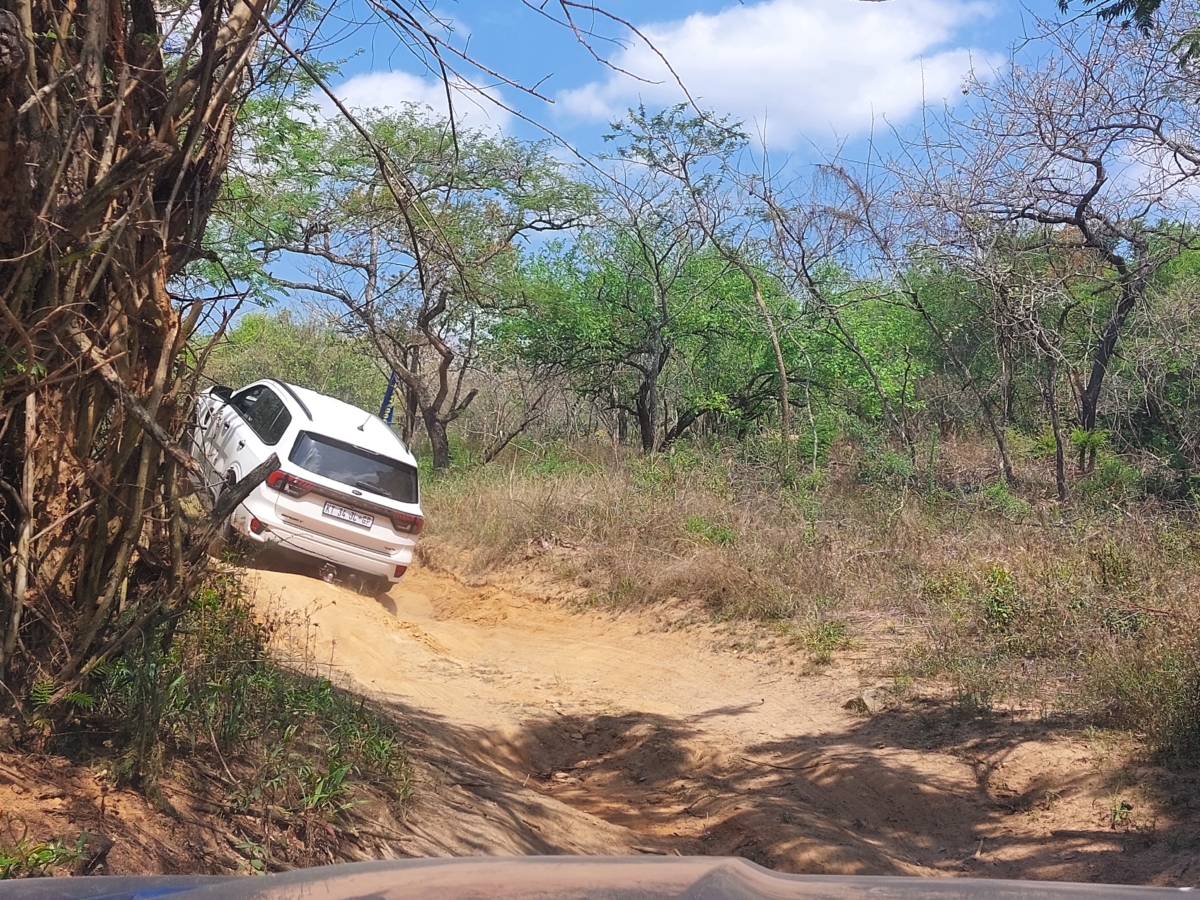
The rocky incline and axle twister was nothing short of successful for the Everest whilst being in a slippery mode used for off-roading. With a choice of two four-wheel drive systems, underbody protection and off-road selectable drive modes plus rear locking differential, two functional tow hooks upfront, its torque and the amount of clever technologies on-board, makes it safe to say that the Everest can face any obstacle its faced with off-road.
With the push of a button, Everest customers can choose from up to six drive modes designed to improve on and off-road comfort and capability. The drive modes are: Normal, Eco, Tow/Haul, Slippery, Mud & Ruts, and Sand.
Rugged outside, but a luxurious, sanctuary within
The first thing that caught our eye was the 12-inch infotainment system that is loaded with Ford’s latest SYNC® 4A system, followed by the amount of interior space the Everest has to offer. Apple Carplay and Android Auto comes standard, along with a 8-speaker sound system, and 8-inch instrument cluster.
The difference between the Sport and Platinums interior are their transmission shifters. The Sport has a traditional shifter, while the Platinum has a svelte, e-shifter. View below.
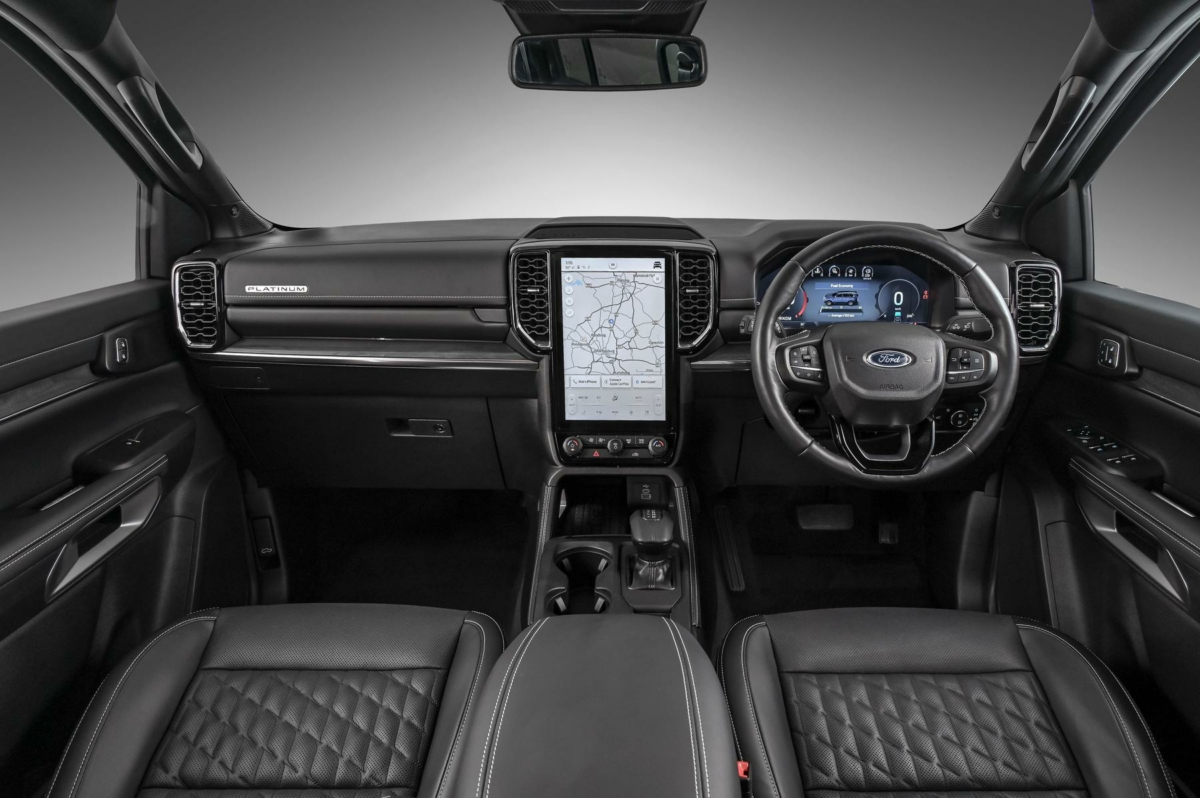
Ford Everest Platinum gearshift
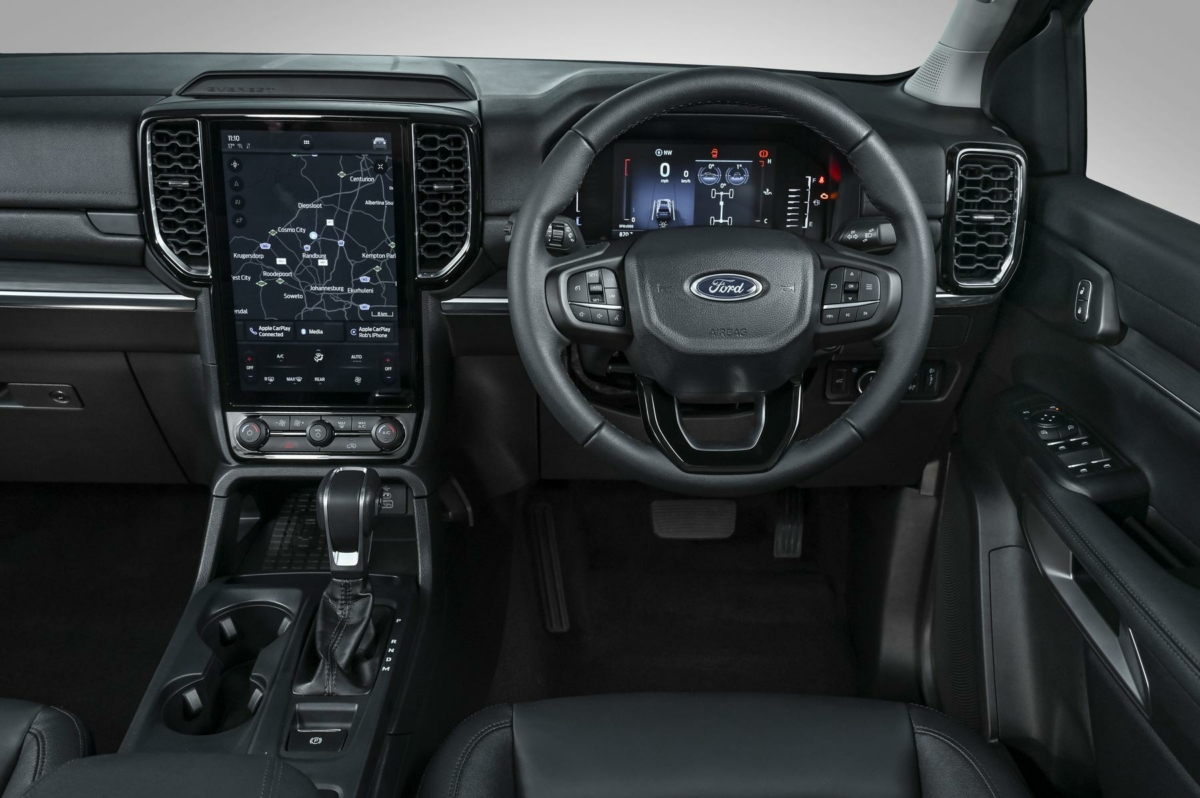
Ford Everest Sport gearshift
Passengers on board are spoilt with Type A and C charging ports in the front and centre consoles, a 400w built-in inverter that allows for laptops and other, bigger electronics via a 12-volt socket that can also power camping accessories such as fridges.
The Platinums infotainment system is also linked to a 360-degree camera with split-view display to make parking a breeze in tight urban spaces or to assist when in tricky terrains.
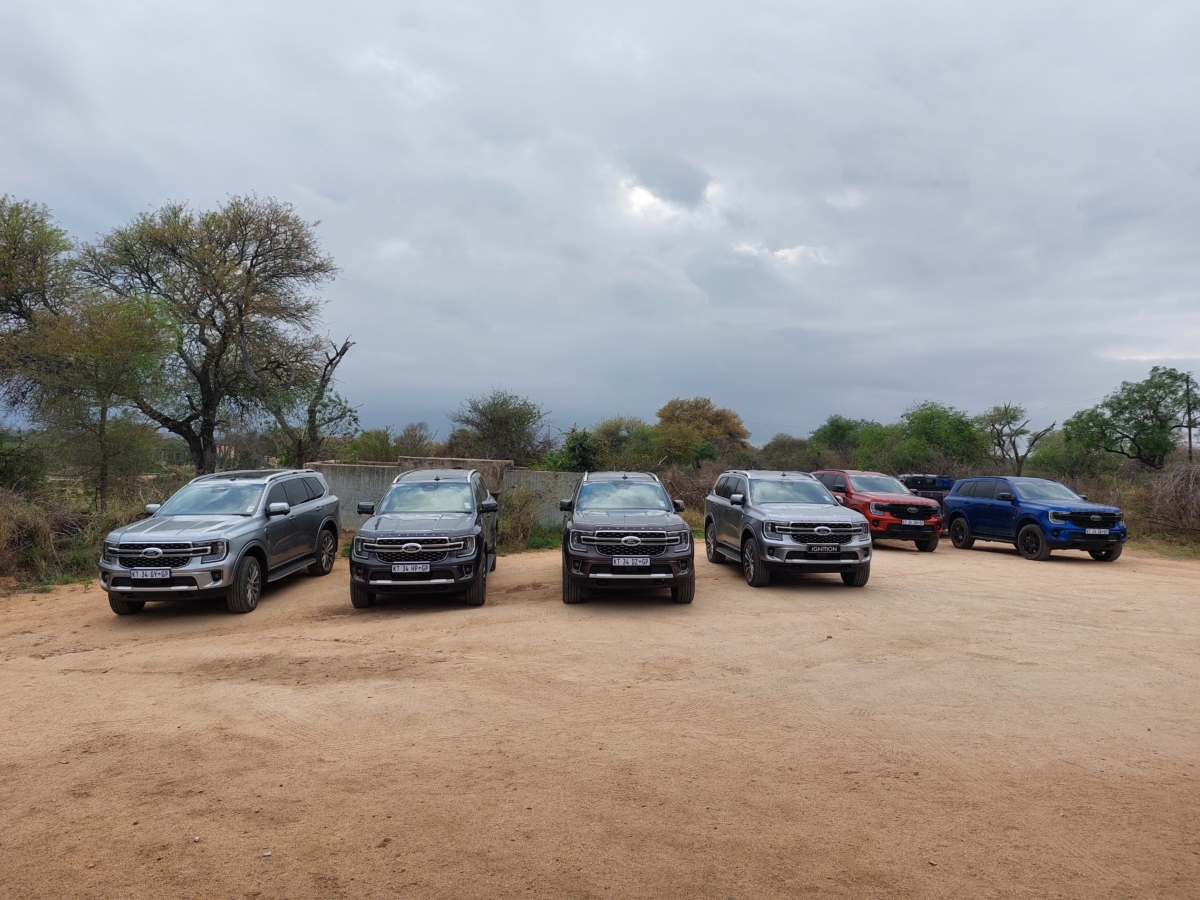
The Next-Gen Ford Everest has a water wading ability up to 800mm and a maximum towing capability of up to 3 500kg.
Driver assist technologies
The Everest boasts new and enhanced driver assist technologies and safety features.
Active Park Assist 2.0 is featured on the Everest Platinum that takes care of the steering, gearshifts, acceleration and braking to navigate into parallel or perpendicular parking spaces with ease. It will also steer itself out of a parallel parking spot when prompted.
New to the Everest is Ford’s latest-generation adaptive cruise control system, fitted as standard on the Everest Platinum. Adaptive Cruise Control with Stop & Go and Lane Centering is able to detect lane markings and help keep the vehicle centred in the lane.
Both the Sport and Platinum models are equipped with Ford’s Lane Keeping System, which includes Lane Keeping Alert and Lane Keeping Aid, Road Edge Detection and Driver Warning. Pre-Collision Assist with Dynamic Brake Support, Forward Collision Warning, Automated Emergency Braking and Reverse Brake Assist further up the arsenal of innovative safety features. Additionally, the Platinum gains Distance Alert and Indication, Evasive Steer Assist and Intersection functionality.
Pricing
– Everest Sport, 2.0L BiT 4WD 10AT – R 965 400
– Everest Platinum, 3.0L V6 AWD 10AT – R 1 113 100
(Prices include VAT)
Included as standard is Ford Protect comprising a four-year/120 000km warranty, four-year/unlimited distance Roadside Assistance and five-year/unlimited distance corrosion warranty. The recommended service interval is 15 000km or annually, whichever occurs first.
Customers have the option of purchasing service or maintenance plans up to eight years or 135 000km. The warranty can be extended up to seven years or 200 000km, while the Roadside Assistance can be extended for an additional one or two years.
We at SA4X4 are curious to know what our readers think of the pricing for the Next-Gen Everest in comparison to the features offered. Is this something you would consider purchasing for you and your family?
Lastly what do you think of the aesthetics? And are there any areas where you would seek improvements?
Let us know in the comments below.