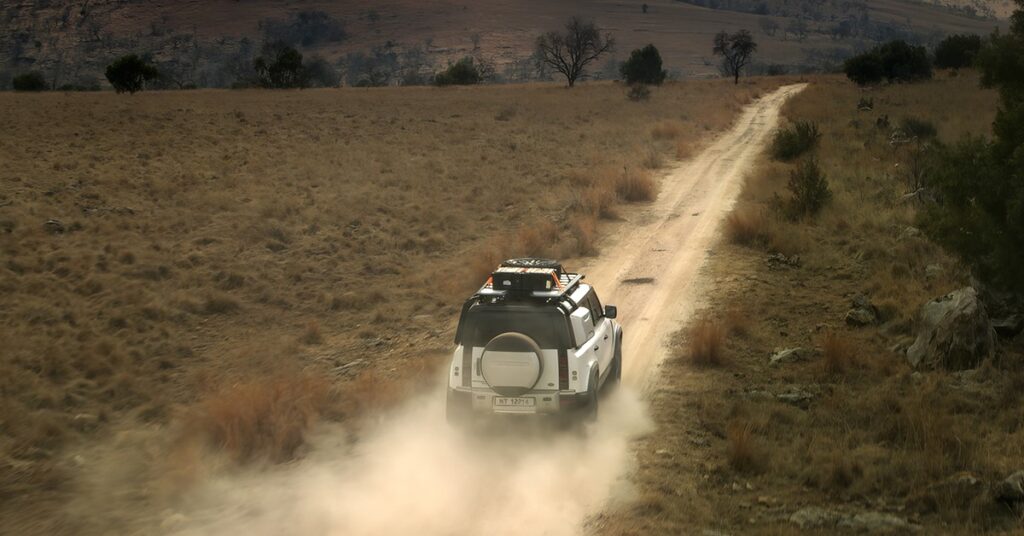
Dust billows behind the rear tailgate, painting the thick African air a deep shade of ochre. The track ahead consists of deep ruts, jagged shale, and a formidable gradient that would make a lesser vehicle shudder. Yet, the Land Rover Defender pressing forward does not hesitate. It simply drops into low range, assesses the traction through a suite of advanced sensors, and climbs.
For decades, the Defender nameplate stood as a ubiquitous symbol of African exploration. From the untamed reaches of the Richtersveld to the muddy, challenging tracks of the Okavango Delta, the classic silhouette earned its stripes the hard way. When Land Rover announced the completely reimagined Defender, purists across the globe – and particularly here in the South African 4×4 community – held their collective breath. Could a monocoque chassis and independent suspension truly replace a live-axle legend?
The answer, delivered emphatically over thousands of gruelling off-road miles, is a resounding yes. Land Rover did not just build a replacement; they engineered an entirely new paradigm of off-road capability that blends rugged durability with unprecedented modern luxury.
Uncompromising Capability on Demand

Engineers at Land Rover built the new Defender upon the D7x architecture – an all-aluminium monocoque chassis that stands as the stiffest body structure the brand has ever produced. It boasts three times the torsional rigidity of traditional body-on-frame designs. This foundational strength translates directly into capability when the tarmac ends.
On the trail, the Defender exercises complete dominance over its environment. It utilises Land Rover’s legendary Terrain Response 2 system, which actively monitors the ground beneath the wheels and adjusts throttle response, differential locks, and traction control in milliseconds. For the serious off-roader navigating unpredictable conditions, the Wade Sensing programme allows the vehicle to tackle water crossings up to a staggering 900mm deep.
Furthermore, the advanced Electronic Air Suspension system provides incredible articulation. When you face a severe washout or a rocky step-up, the suspension lifts the vehicle to provide a maximum ground clearance of 291mm. The Defender achieves an approach angle of 38 degrees, a breakover angle of 28 degrees, and a departure angle of 40 degrees. These figures do not just look good on a spec sheet; they ensure that when you point the nose towards Baboons Pass, the vehicle carries you through safely.
Four Flavours of Adventure: Defender 90, 110, 130 and OCTA Models
Land Rover understands that no two overlanders share the exact same requirements, which is why they offer the Defender in three distinct body styles.
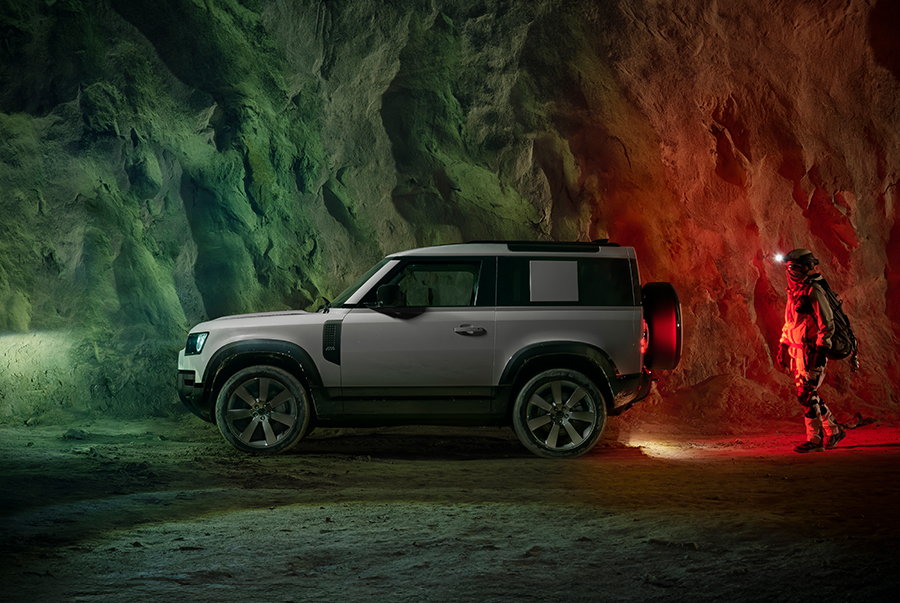
The Defender 90: This short-wheelbase variant serves as the ultimate trail weapon. Agile, nimble, and boasting incredible breakover angles, the 90 appeals to the dynamic adventurer who prioritises trail performance and striking aesthetics. It scrambles up rocky inclines with the enthusiasm of a mountain goat, making it perfect for tight, technical weekend trails.
The Defender 110: The quintessential overland platform. The 110 strikes the perfect balance between everyday driveability and expedition readiness. It offers ample cargo space for extended trips into the Kalahari, comfortable seating for five (or a 5+2 configuration), and exceptional payload capacities. When South Africans envision a fully kitted touring rig carrying a rooftop tent and a fridge-freezer, they picture the Defender 110.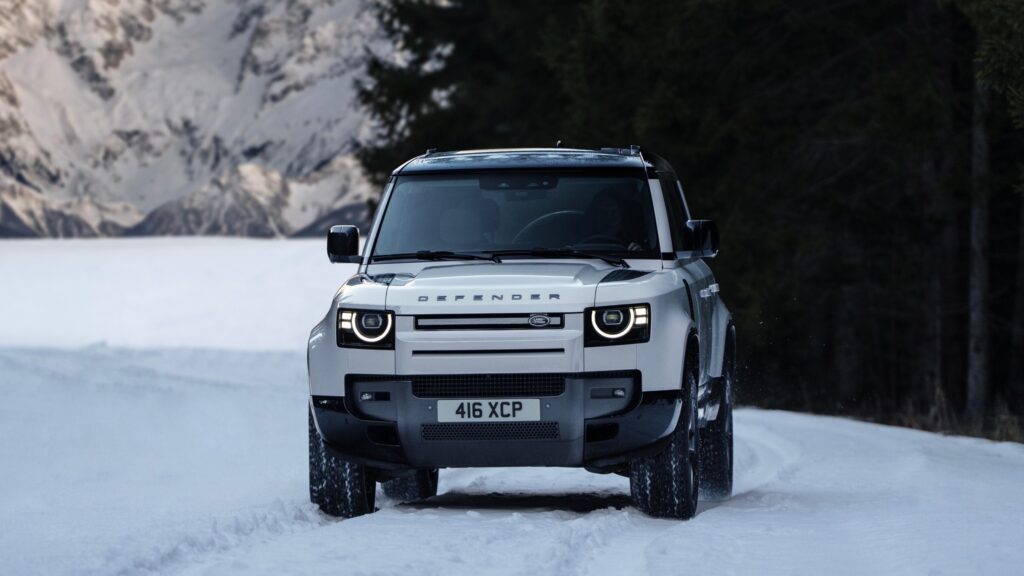
The Defender 130: For those who believe adventure should include the whole family, the 130 extends the body to provide luxurious seating for up to eight adults. Despite its increased length, the 130 maintains the trademark off-road prowess of its siblings, ensuring that large groups can explore off-grid destinations without compromising on comfort or capability.

The Defender OCTA: The Land Rover Defender OCTA is a high-performance luxury variant, featuring a 626-hp 4.4L twin-turbo V8, wider stance (+68mm), and advanced 6D Dynamics suspension. Conversely, the Defender 130 is a long-wheelbase luxury SUV focused on passenger capacity (up to 8 seats), typically using 3.0L mild-hybrid powertrains. The Octa prioritizes speed and extreme off-road capability over 130’s family seating.
The Defender OCTA is best suited for navigating extreme terrain like the Sani Pass with high-speed performance, or for drivers wanting superior off-road capabilities such as specialized “Octa Mode” for maximum performance in sand or mud.

Powertrains Built for the African Bushveld

Powering these premium 4x4s is a line-up of engines explicitly designed to handle heavy loads, steep climbs, and long-distance touring. Land Rover provides South African buyers with a variety of cutting-edge powertrains to suit every driving style.
The Ingenium diesel engines, particularly the D250 and D300 six-cylinder options, stand out as the premier choice for serious overlanders. The D300 produces a muscular 221kW and an immense 650Nm of torque. This torque figure proves crucial when towing heavy off-road caravans through thick Mozambican sand or maintaining highway speeds on the long stretches of the N1. The mild-hybrid technology integrated into these engines ensures smooth power delivery while optimising fuel economy – a critical factor when the next fuel station sits hundreds of kilometres away.
For those who desire exhilarating performance, the petrol range includes the powerful P400 and the heart-pounding P525 supercharged V8. The V8 transforms the Defender into an absolute powerhouse, offering an intoxicating exhaust note and blistering acceleration, without sacrificing the vehicle’s inherent dirt-road capability.
Accessorise Your Expedition

A true 4×4 acts as a blank canvas for its owner, and Land Rover embraces this philosophy wholeheartedly. The brand offers four distinct accessory packs – Explorer, Adventure, Country, and Urban – allowing you to tailor the Defender exactly to your lifestyle.
For the SA4x4 reader, the Explorer Pack takes centre stage. It equips the Defender with a robust Expedition Roof Rack, a Raised Air Intake for dusty convoy driving, and an exterior side-mounted gear carrier perfect for storing muddy recovery gear. Matte black bonnet decals reduce glare during harsh midday sun, while classic mudflaps protect the paintwork from flying gravel.
Beyond the curated packs, owners can dive into a massive catalogue of optional extras. You can spec your Defender with an integrated air compressor mounted in the loadspace to effortlessly reinflate tyres after a beach run. A front undershield provides heavy-duty protection for vital components, and the deployable roof ladder grants easy access to your rooftop cargo. Inside, the durable and easy-to-clean cabin materials ensure that African dust and mud wipe away effortlessly after a long weekend in the bush.
The Ultimate 4×4 Lifestyle

The Land Rover Defender does not just exist as a mode of transport; it serves as a catalyst for adventure. It bridges the gap between the rugged, spartan workhorses of the past and the hyper-connected, luxurious 4x4s of the future. It actively encourages you to take the long way home, to seek out the gravel detour, and to wake up to a sunrise over the Makgadikgadi Pans.
Whether you are navigating the concrete jungle during the working week or conquering the rugged trails of the Cederberg on the weekend, the Defender handles every environment with absolute composure.
To find out more about Land Rover’s stock Defender line-up with pricing, optional extras and engine specifications please click on the link below: