The idea of a 4 X 4 Trail in the Naukluft Mountains was first proposed at a staff meeting in early 1993. The pro and cons were discussed by the rangers and the park biologist Dr Hu Berry.
This content piece was written by Peter Bridgeford:
On 27 July 1993 after the monthly staff meeting at Naukluft, we all took the track up to the Naukluft Plateau and did an inspection of the proposed route and campsite at Tjeriktik. Our boss, Achim Lenssen, suggested an alternate route from Tjeriktik back to main track. This old farm track was partly in a riverbed but with some work, it could be used again. In March 1994, the idea was accepted by head office.
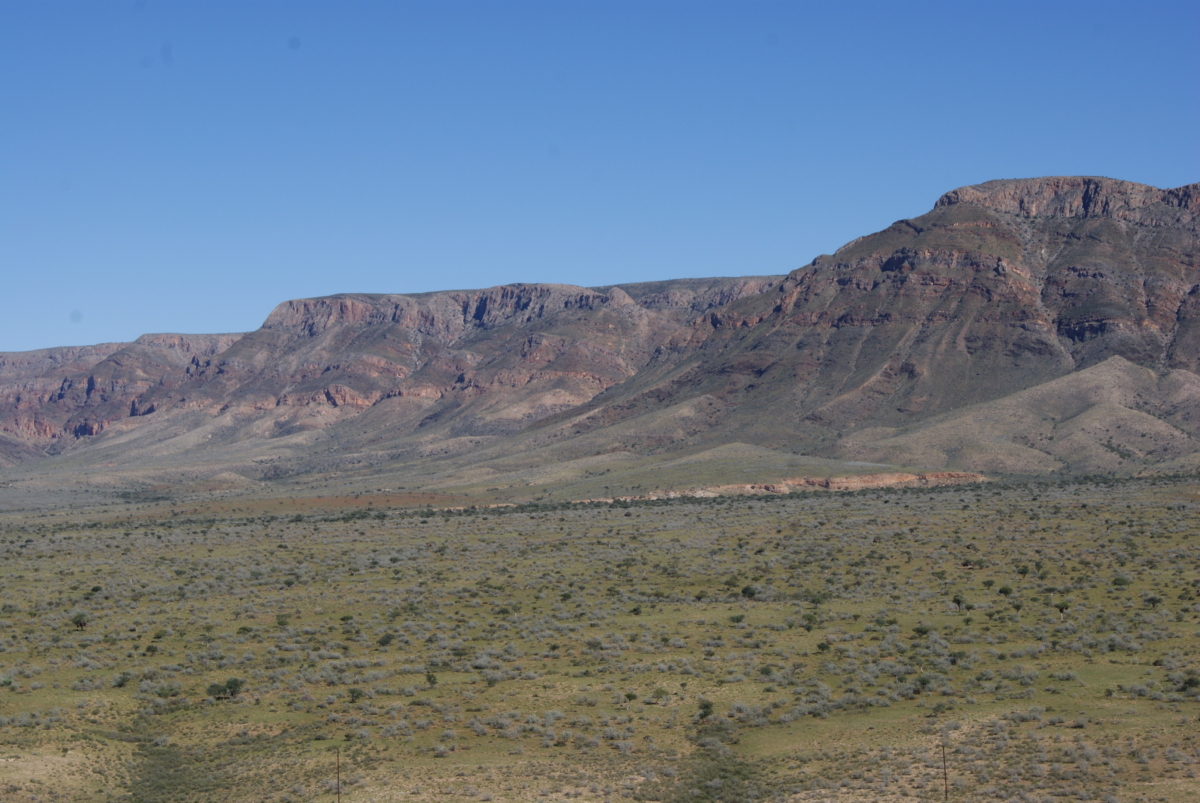
In May 1994, Ranger Jaco Steenkamp, Scout Bakap Voetze and I did the first trip to Tjeriktik to start work. The valley on the eastern side of the plateau was decided on as it had roads, there was a borehole drilled by pioneering farmers and a flat area to build the overnight facilities. The first priority was water. The borehole, never utilised by Conservation, was found to be 50m deep, with 8m of water. We installed a mono hand pump. After three long busy days, we left. Jaco and his team from Naukluft cleared the track in the river, manhandling huge rocks out of the track with crowbars and sweat,
We could not work full-time on the project, as we still had many other important tasks to consider. A lot of time was spent on keeping our windmills that supplied water to game, in a working condition and we had many kilometres of border fence to repair and maintain. Sesriem and Sossusvlei needed constant attention with the high number of tourists visiting the area.
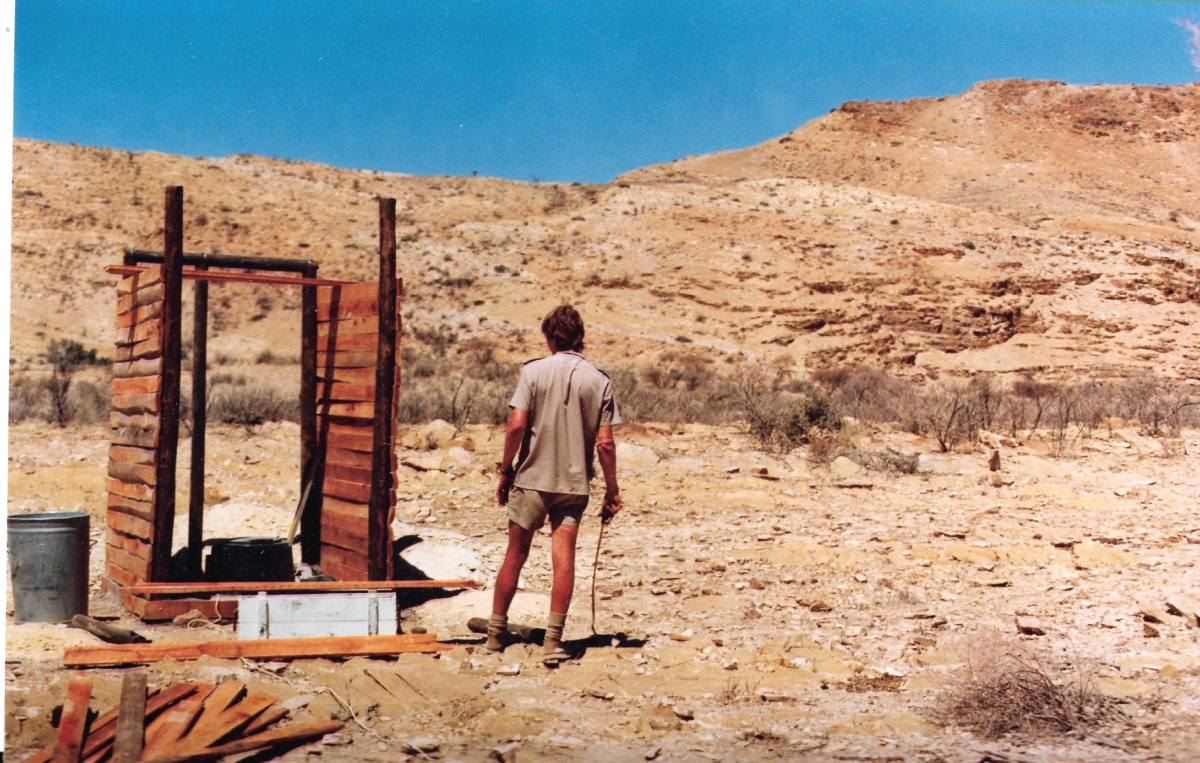
In July, Jaco and I spent five days at Tjeriktik. We started on a shower and marked out the trenches to be dug for the foundation of the first of the four shelters and the two toilet pits. We also started collecting information for the Trail brochure. To fit the concrete mixer onto the Landcruiser, we had to remove the fuel and water tanks from the load bed. When we eventually arrived at Tjeriktik, we put up tents for the workers and rangers. It was winter and cold and the next morning, the water in a bucket was frozen. The ground was hard: dolomite, limestone and conglomerate and we used a jackhammer to dig the foundations and the toilet pits.
Tjeriktik is the Afrikaans name for the Titbabbler Parisoma subcaeruleum, a common bird of the area. The call is described as ‘tjerik-tik-tik’. It is interesting to note that the name was given to this water source on 26 November 1968 when the first ranger, Piet Halali van der Westhuizen, was stationed at Naukluft, in what was then the Naukluft Mountain Zebra Park. On patrol to this windmill, the first bird he saw was a Tjeriktik and decided that was now the name for the waterpoint.
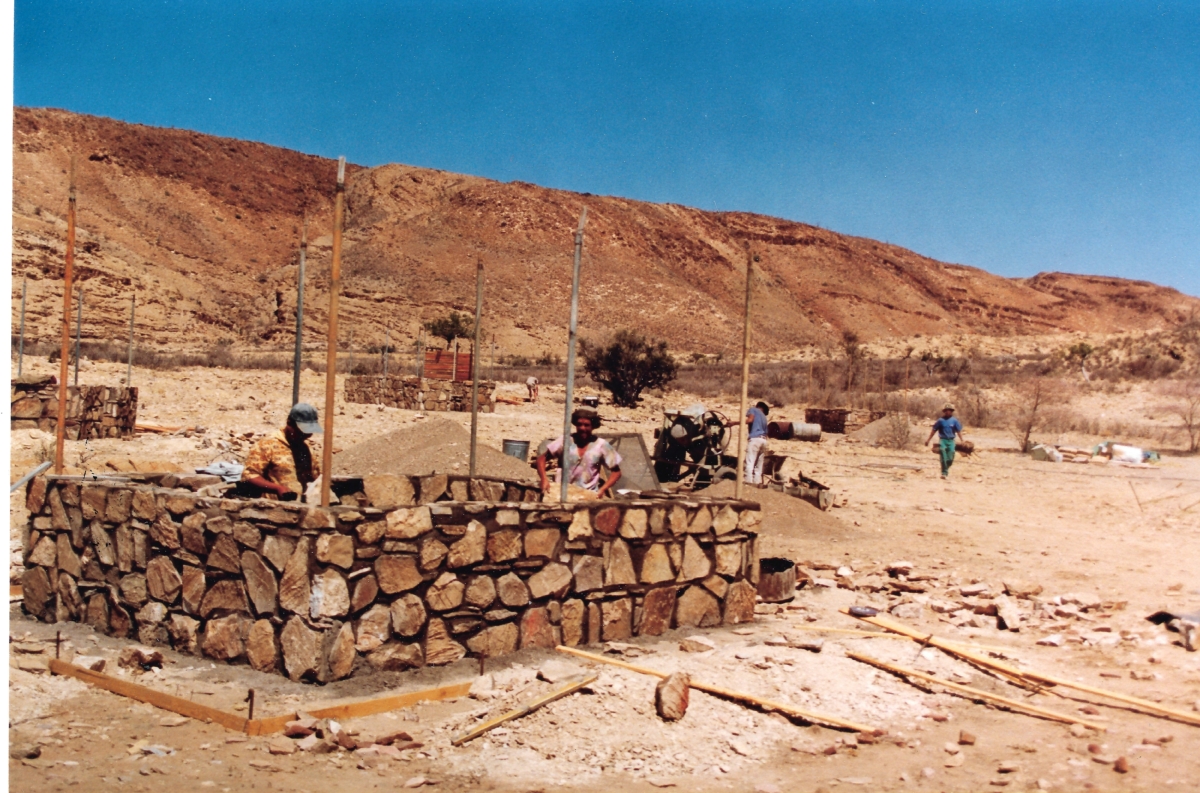
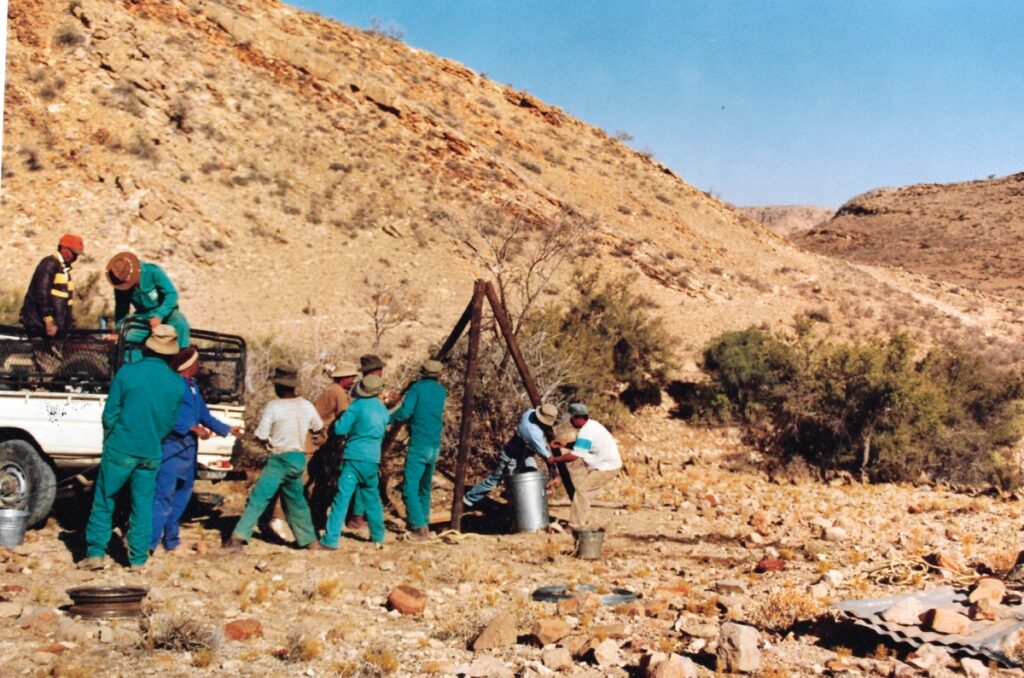
It was only a month later, on 16 August before we worked again at the site for four days. We engaged two builders who specialised in building with stone. Stones and river sand were collected for the concrete from a dry watercourse. We removed the mono hand pump and fitted another mono and small petrol engine on the borehole to supply water to the staff and for building, as the hand mono did not deliver enough for that. However, the engine driving the mono pump was not strong enough. So, we rigged up a tripod and pulley on a well nearby and hauled out water in a 200-litre drum.
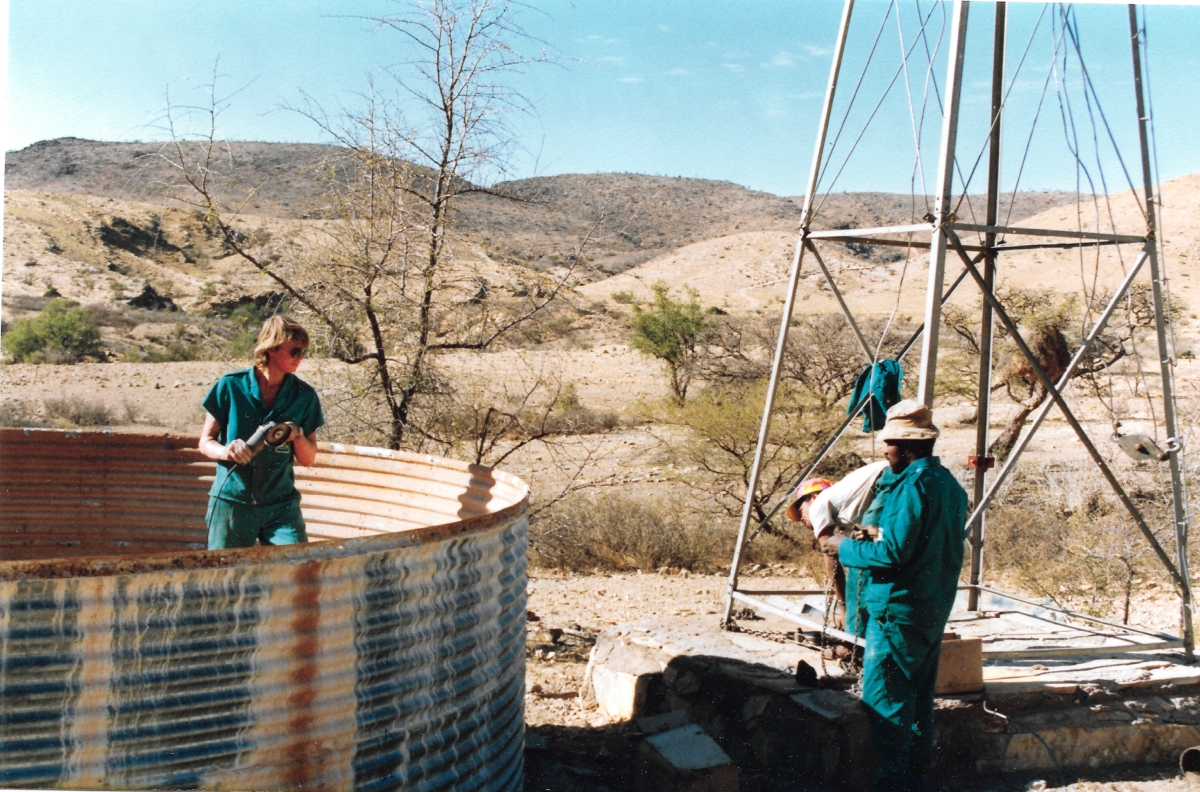
The work did not stop. On the 22 September the walls of the last shelter and braai area were done. The hand mono was connected again to supply drinking and shower water. A 200-litre drum, painted black, for sun heated shower water was installed above the shower cubicle.
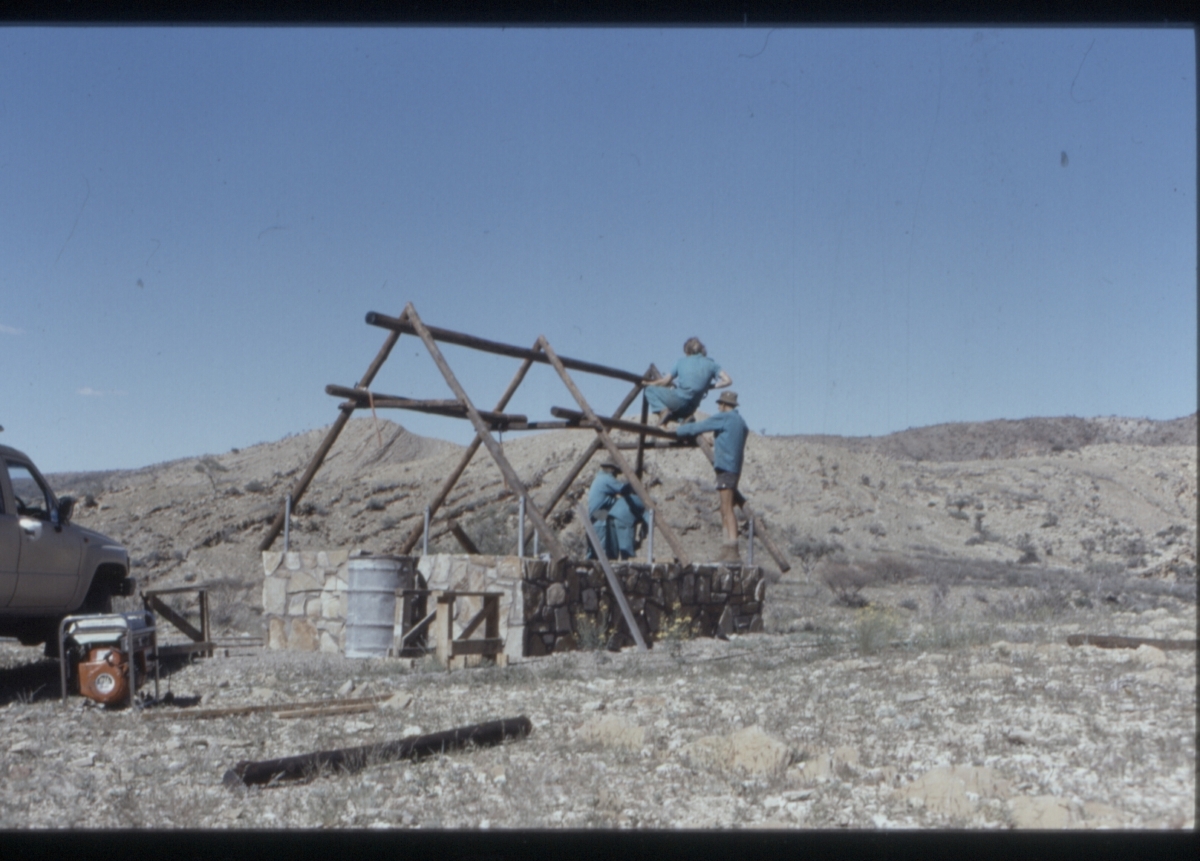
We only started work there again the following year on 6 March 1995. Jaco and his wife Pam worked on the roof structure, the 5-metre ridgepole and then the purlins and finally the IBR galvanised roof. French was regularly spoken from the rooftop by Jaco as he punched the holes for the IBR roofing bolts. The roof was painted tennis-court green and looked good. Then only 12 days later did we drive up to Tjeriktik again to continue the work for four days.
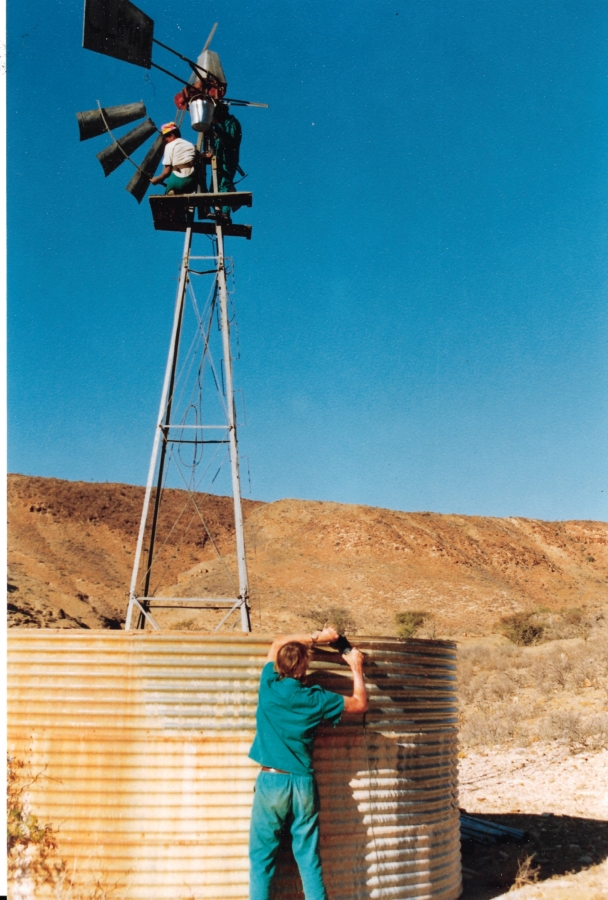
We removed the windmill head and then the tower and started clearing up the site and removing equipment. The last roof was done by the end of April and final clearing of the area started. Then bakkie loads of shale-gravel were driven in for the hut floors and braai area for a clean and dust free environment.
In April and May, several of the fittings, doors, tables, braai grids, road signs and signposts were made at Zais and Naukluft ranger stations. Jaco engraved each shelter name on hard wood, such as false ebony and these were bolted to the roof structure above the entrance.
The text and photos for the brochure, including the history of the area, were collected by the staff and when completed, sent to Toyota for printing, as they had agreed to sponsor the costs. In August, the final work was done and the facilities ready for the official opening.

On 11 September 1995 the Trail was officially opened by the Director, Mr Polla Swart. We all met under the umbrella thorn trees at the parking area and starting point of the Olive Hiking Trail. From there we drove up the narrow track to a point where the distinctive ‘de la Bat rock’ overlooked the valley below and a rock was symbolically rolled out of the way. The Trail was open! Our boss from Windhoek, Leon van Rooyen and his wife Lillian were also present, as were the workers and their wives from Zais and Naukluft. Visitors from the surrounding area, lodge owners, farmers and the representatives of Toyota, the press and NBC TV from Windhoek, all drove up to Tjeriktik and spent the night camped there. The next morning, they drove to Bakenkop, the end of the Trail with a view of the valley below, before heading down the mountain.
The Trail has been closed for some years due to damage to the mountain road.
To get your stories published on our platform, simply get in touch with us by clicking here. We would love to share your 4×4 adventure memories and experiences with our 4×4 fraternity.